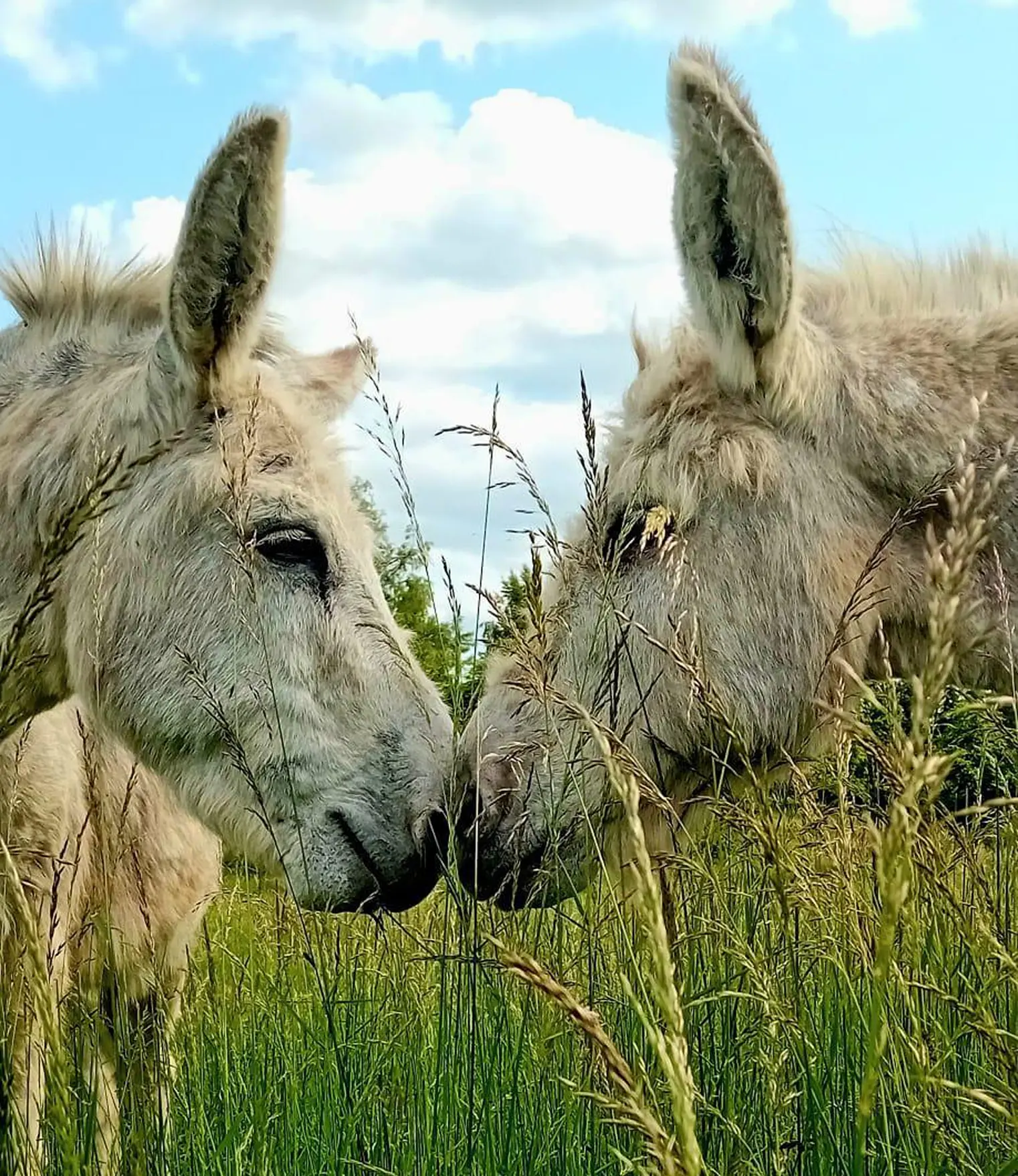
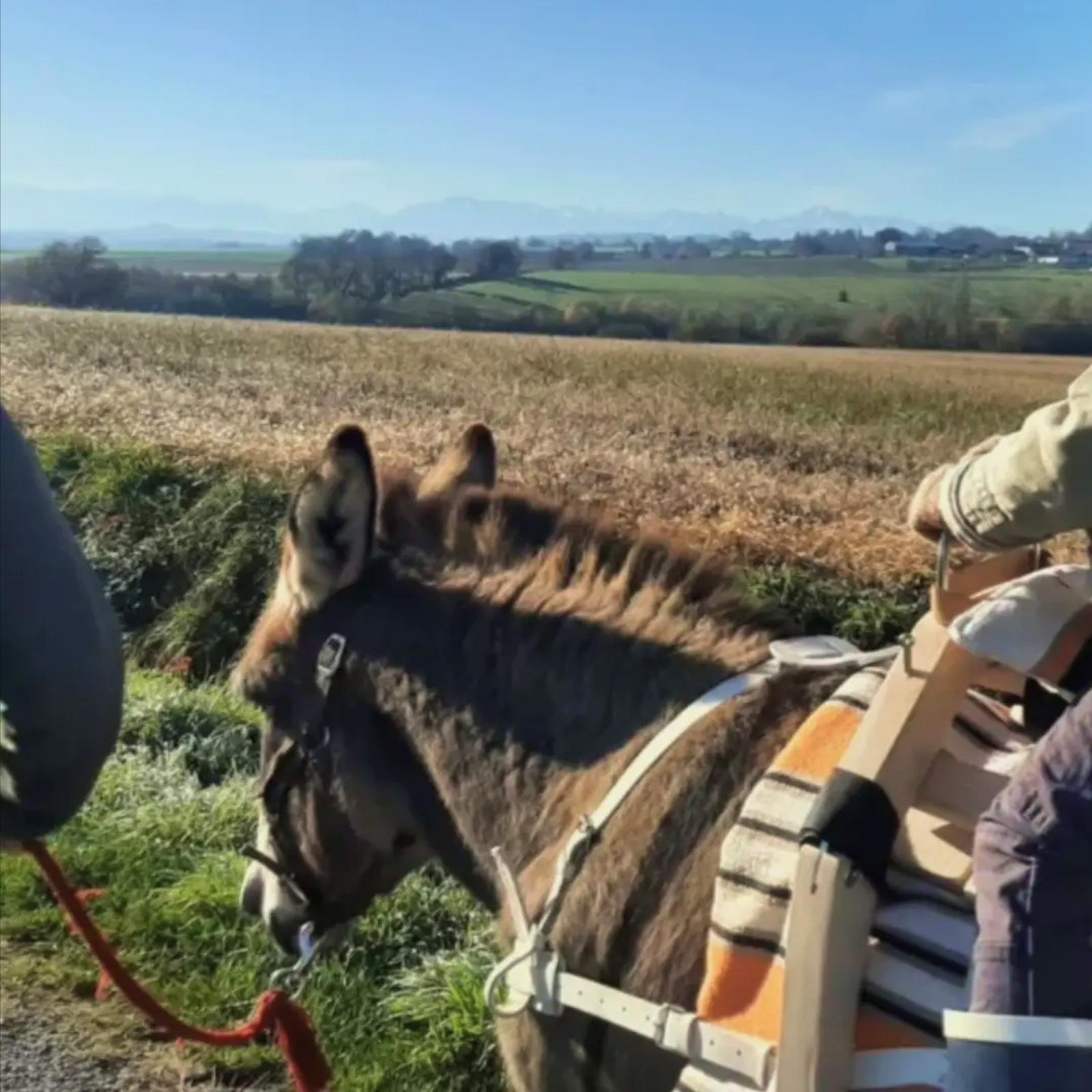
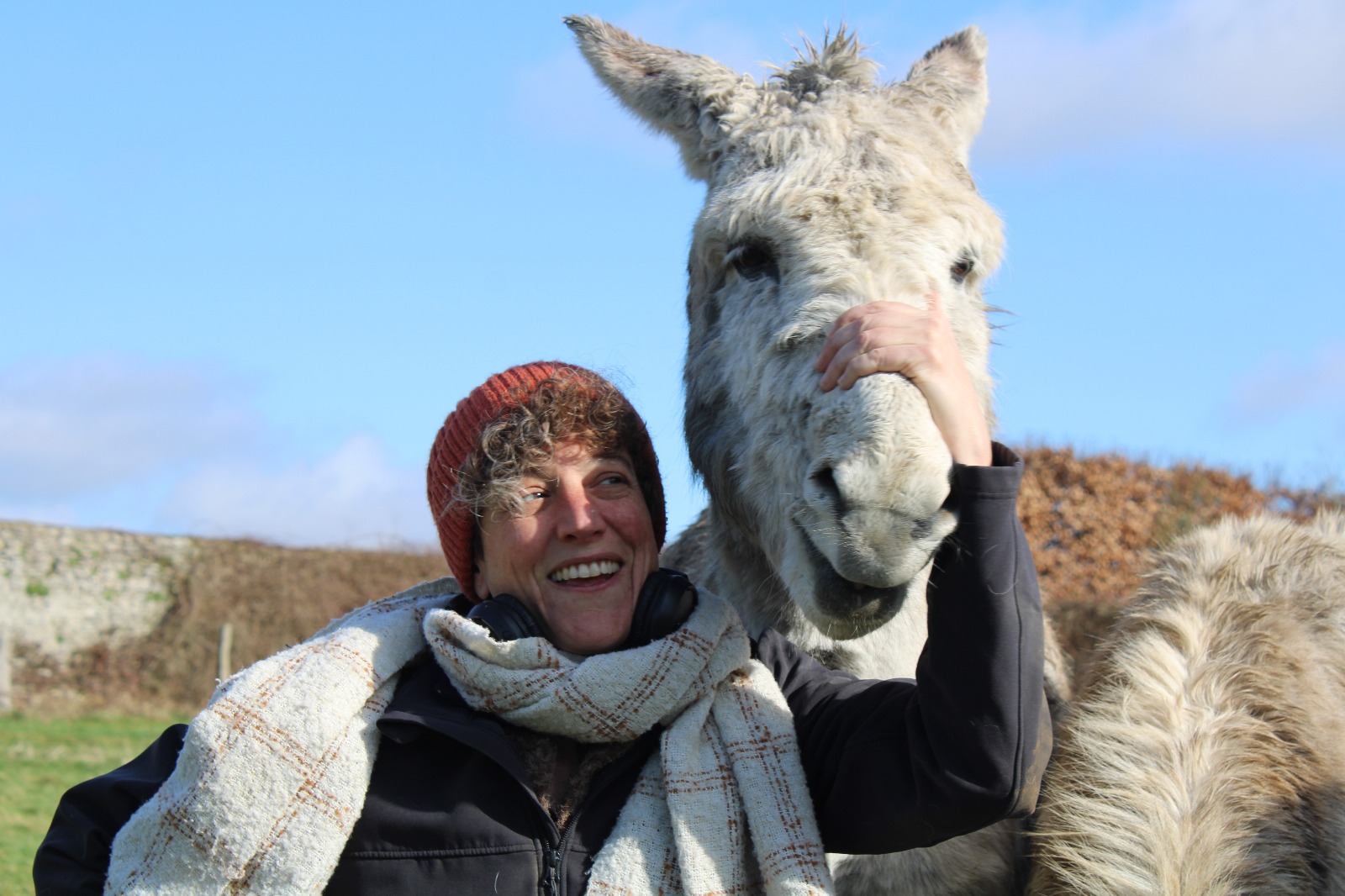
Zootherapy
Zootherapy : a way to reconnect with ourself and others. Objective: to help humans develop their human instincts, particularly patience, respect, and nonverbal communication.
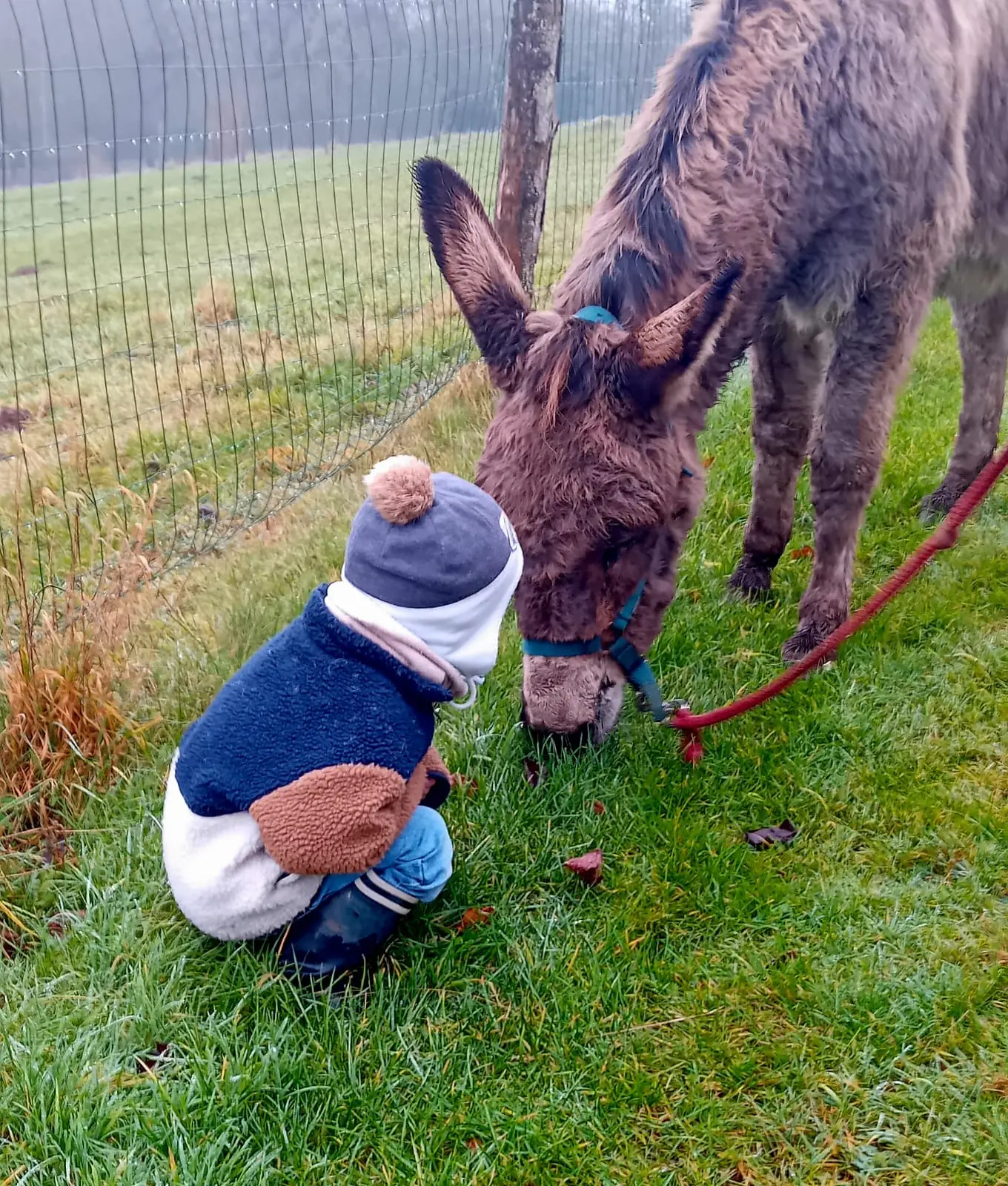
To stimulate, soothe, or support within a therapeutic, educational, or social approach
Zootherapy is a support methodology that relies on the presence of an animal specifically trained to foster positive interactions between a professional practitioner, one or more beneficiaries, and the therapy animal. It is always part of an individualized program and is based on specific goals (communication, motor skills, self-esteem, emotion management, etc.).

Reducing stress, anxiety, and loneliness

Stimulating communication (verbal and nonverbal)

Promoting motor skills (petting, grooming, feeding)

Learning to take care of ourself

Building self-esteem and confidence

Encouraging responsibility and cooperation

Providing emotional comfort without judgment
Zootherapy with donkeys: who is it for?
Zootherapy is, above all, an encounter. In my sessions, I offer a space for connection and a sensory experience with the animal.
Supporting personal path
Sessions focus on various areas of work, such as self-esteem, confidence, care, letting go, patience, listening,nonverbal communication, and stress management
With their gentle, sensitive, and genuine nature, donkeys invite us to slow down, listen to our feelings, and experience a relationship based on respect and consistency. Each encounter is therefore unique:it adapts to each person’s needs, abilities, and life experiences,within a caring and inclusive setting.
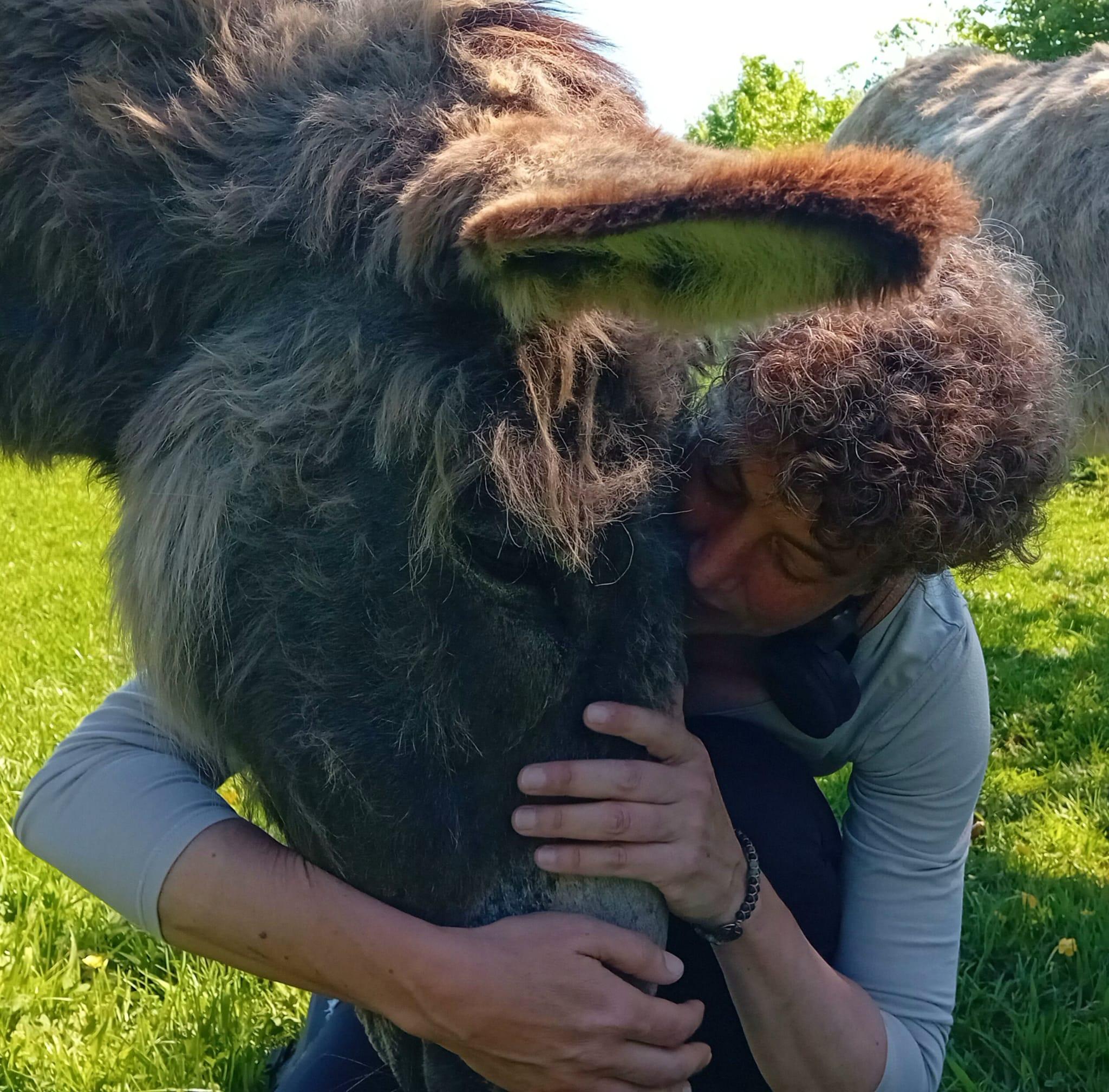
The Framework of Donkey-Assisted Therapy
Safety is central to donkey-assisted therapy; itdetermines the well-being of the participants, the therapist, and theanimal alike.
The donkey is avaluable partner, endowed with great sensitivity and an ability toform bonds. But like any animal, it may react unpredictably if itfeels surprised, constrained, or in danger. It is therefore essentialto establish a clear and reassuring framework that ensures a calm andrespectful interaction.
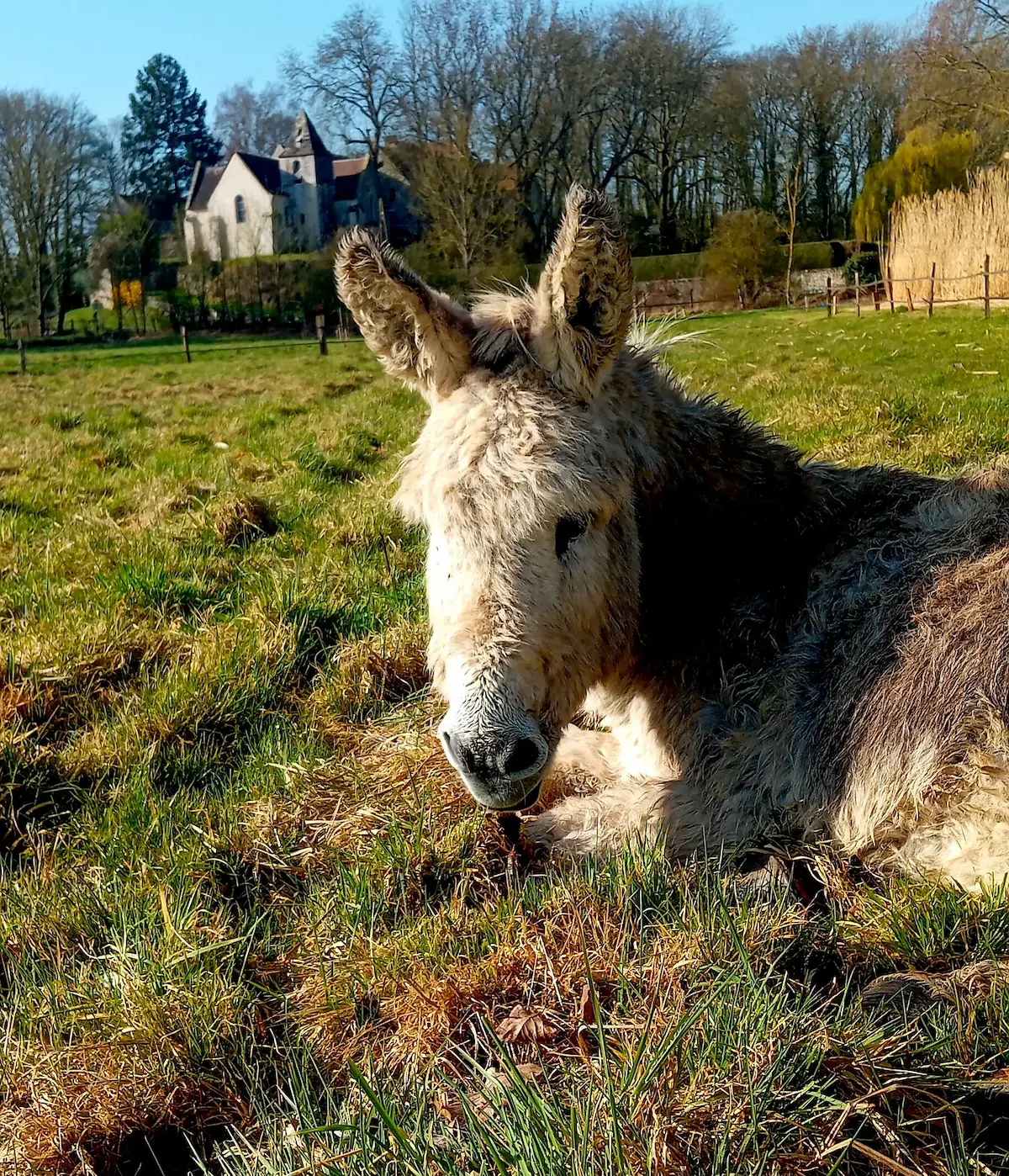
Preparation of the donkey
- Check the donkey’s health and behavior beforethe session.
- Prepare theequipment (halster, lead rope, brushes) for each donkey.
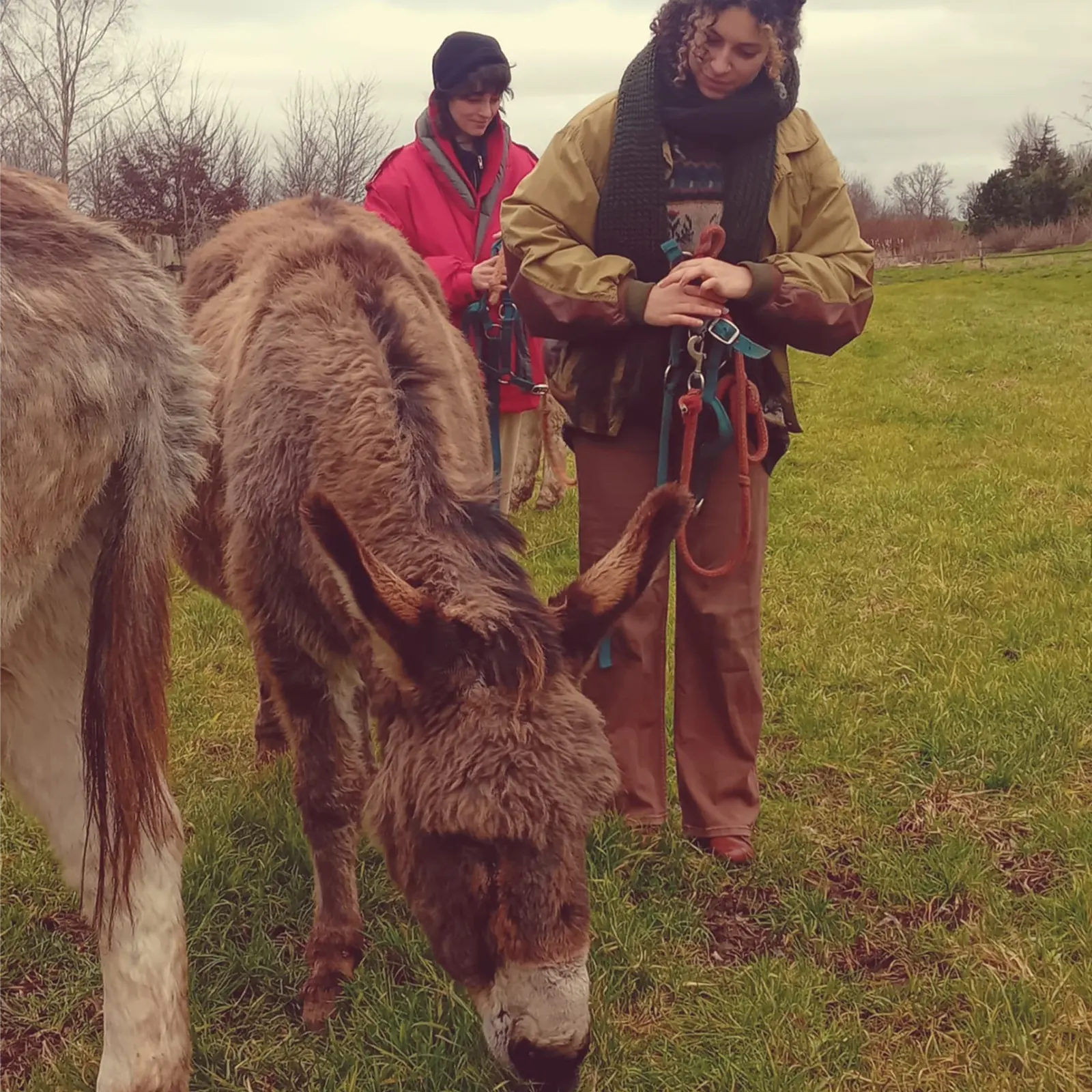
Instructions for Participants
- No shouting, no sudden movements, no running.
- Approach the donkey from the side and gently.
- (An adult may need to be present for each child.)
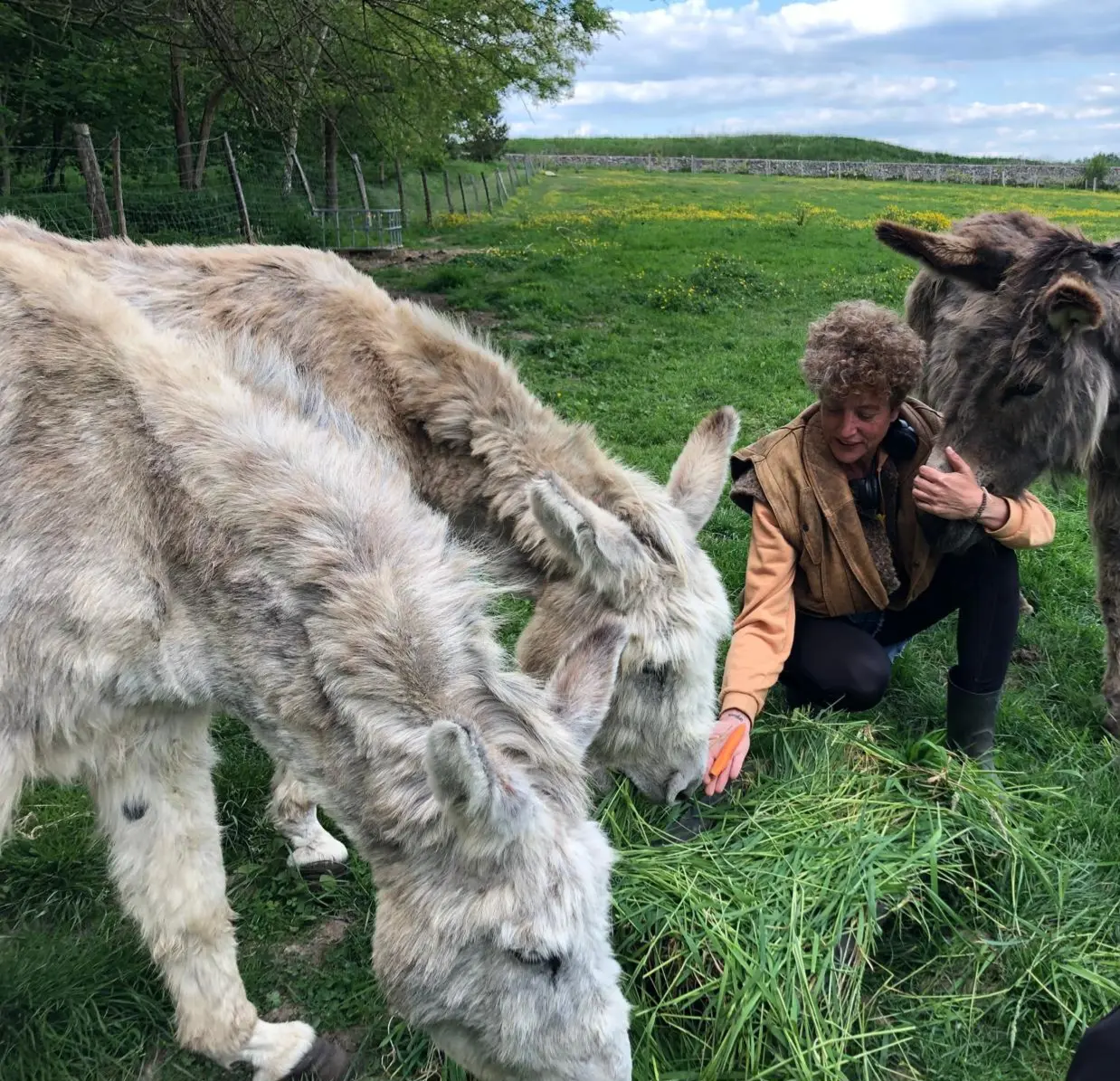
Safe Handling
- Hold the lead rope correctly without pulling, asdemonstrated by the instructor.
- Allow thedonkey an escape route to avoid stress.
- Watch forsigns of discomfort (ears laid back, tension, sudden movements).
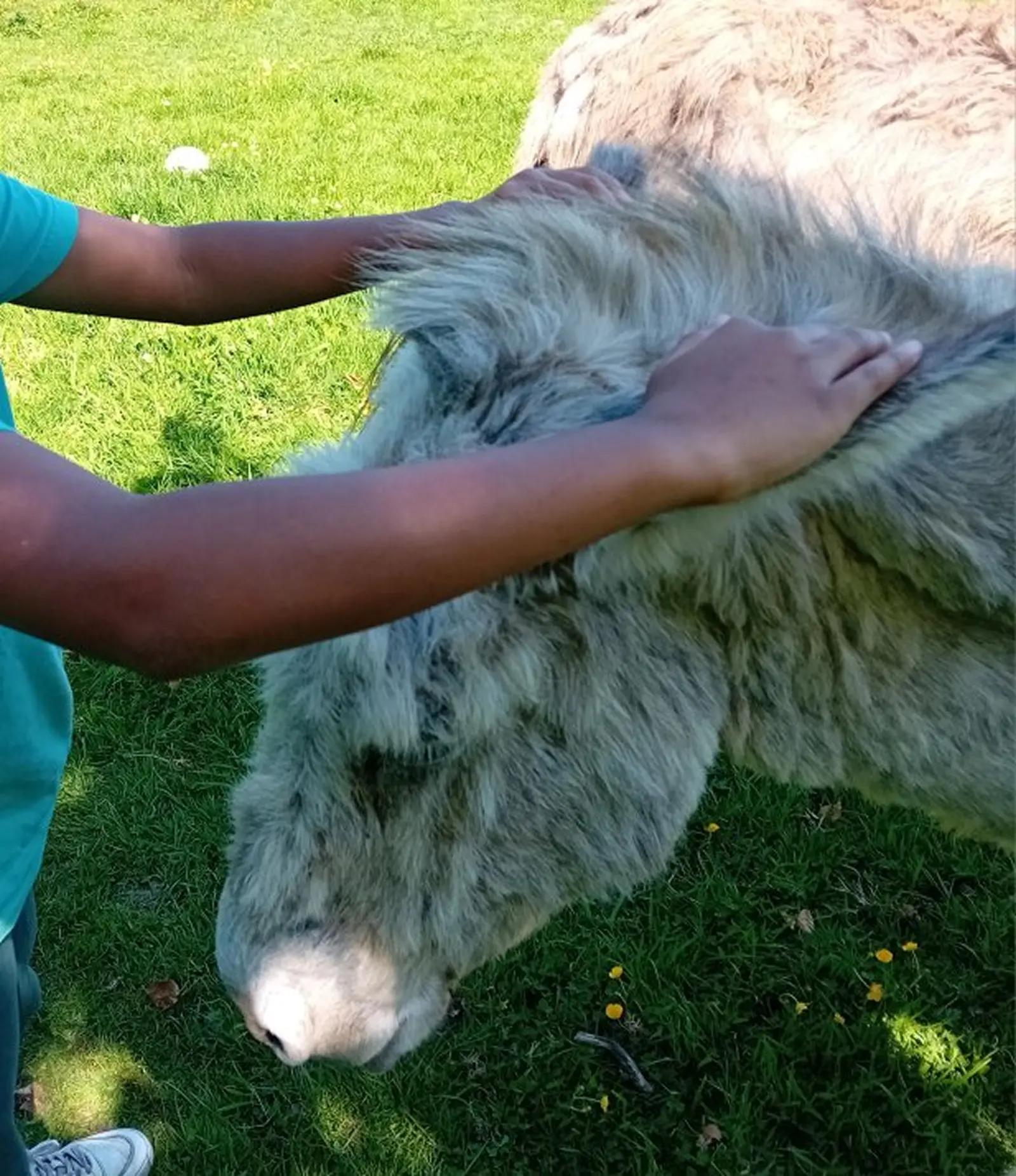
Hygiene and Safety
- Wash your hands before and after each session.
- Wearappropriate clothing: closed-toe shoes, practical clothing.
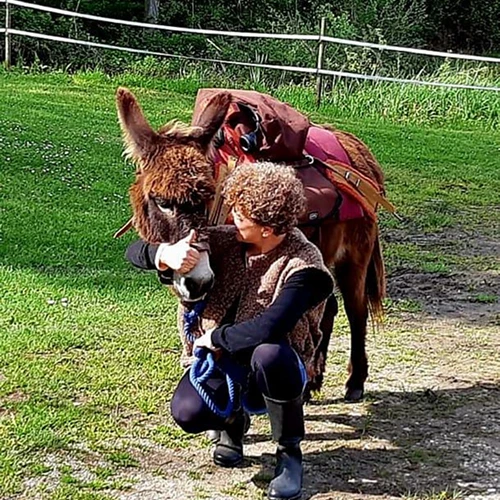
Responsibilities and Legal Framework
- Respect the session duration indicated by the facilitator to avoid tiring the donkey.
- The instructor may stop the activity in the event of stress or danger to the donkey or participants.
- All activities offered are insured by Sol’Âne, but this does not exempt individuals from their own civil liability.
Since I am not a healthcare professional, my collaboration with other professionals—including psychologists, neuropsychologists, psychiatrists, experts in sexual violence, and others—as well as with caregiver organizations, is essential. These partnerships ensure that the support provided is consistent, complementary, and respectful of each person’s unique journey.
Field Stories and News
I regularly share stories from the field, encounters, feedback, and reflections drawn from my daily work with donkeys and the people I support.