Salto and learning to carry a pack
Remote support for teaching a donkey with a sensitive past to carry a pack, using a respectful and gradual approach.
A meeting and a memorable story
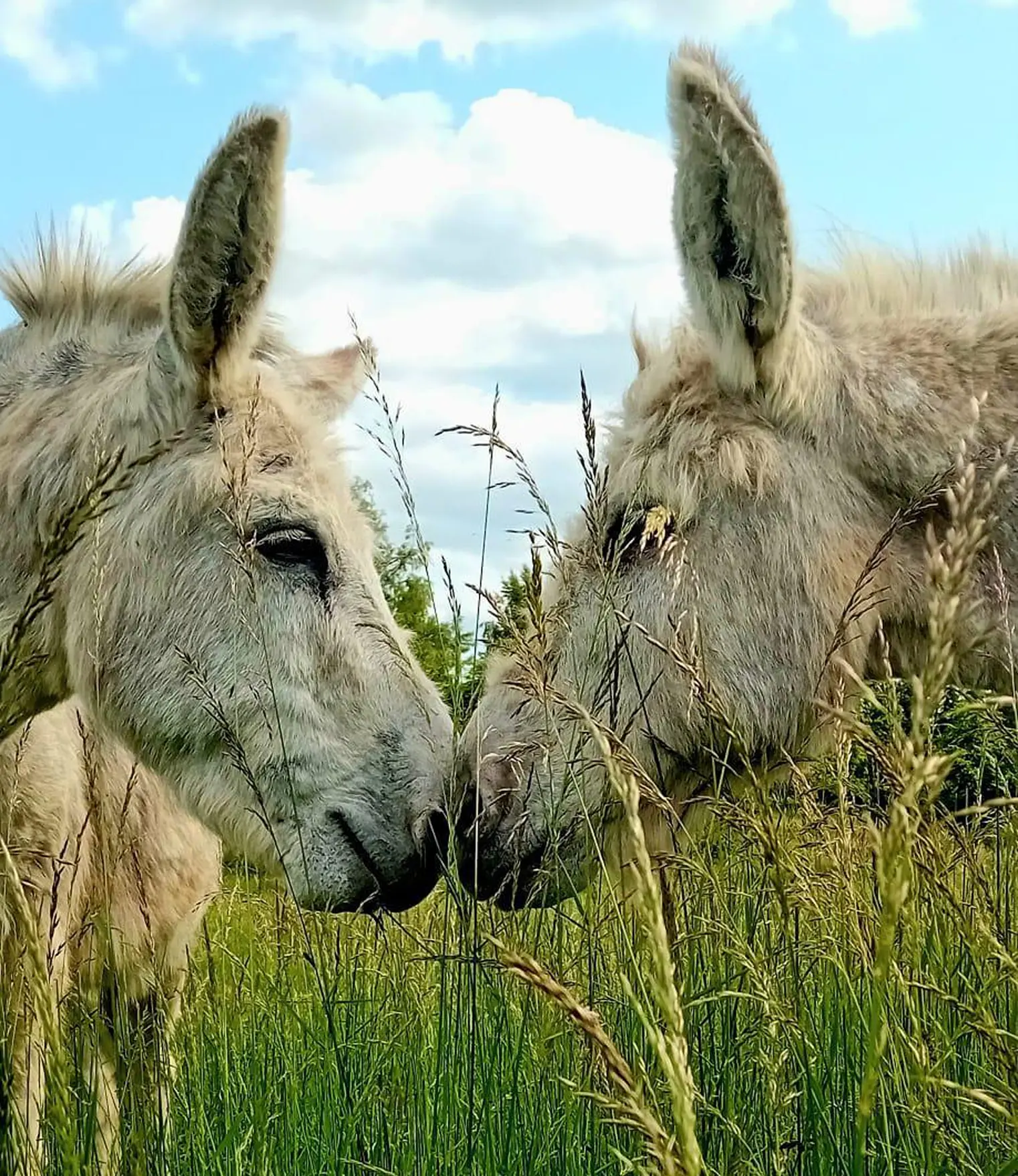
Almost a year ago now, I had the chance to meet — remotely — the family of Salto and Pino, two magnificent donkeys whose story immediately touched me because of the sensitivity it revealed and the dedication of their adopters.
From our very first exchanges, it was clear that this family had shown remarkable courage and patience in guiding these two donkeys, who had had a difficult start in life, towards a more peaceful existence that respected their fundamental needs.
Salto and Pino had had to learn to trust humans again, a process that can sometimes belong and delicate, but which had been handled with exemplary gentleness.
Support tailored to Salto
Following this introduction, let’s focus on Salto, as it was primarily for him that the family was seeking specialist support.
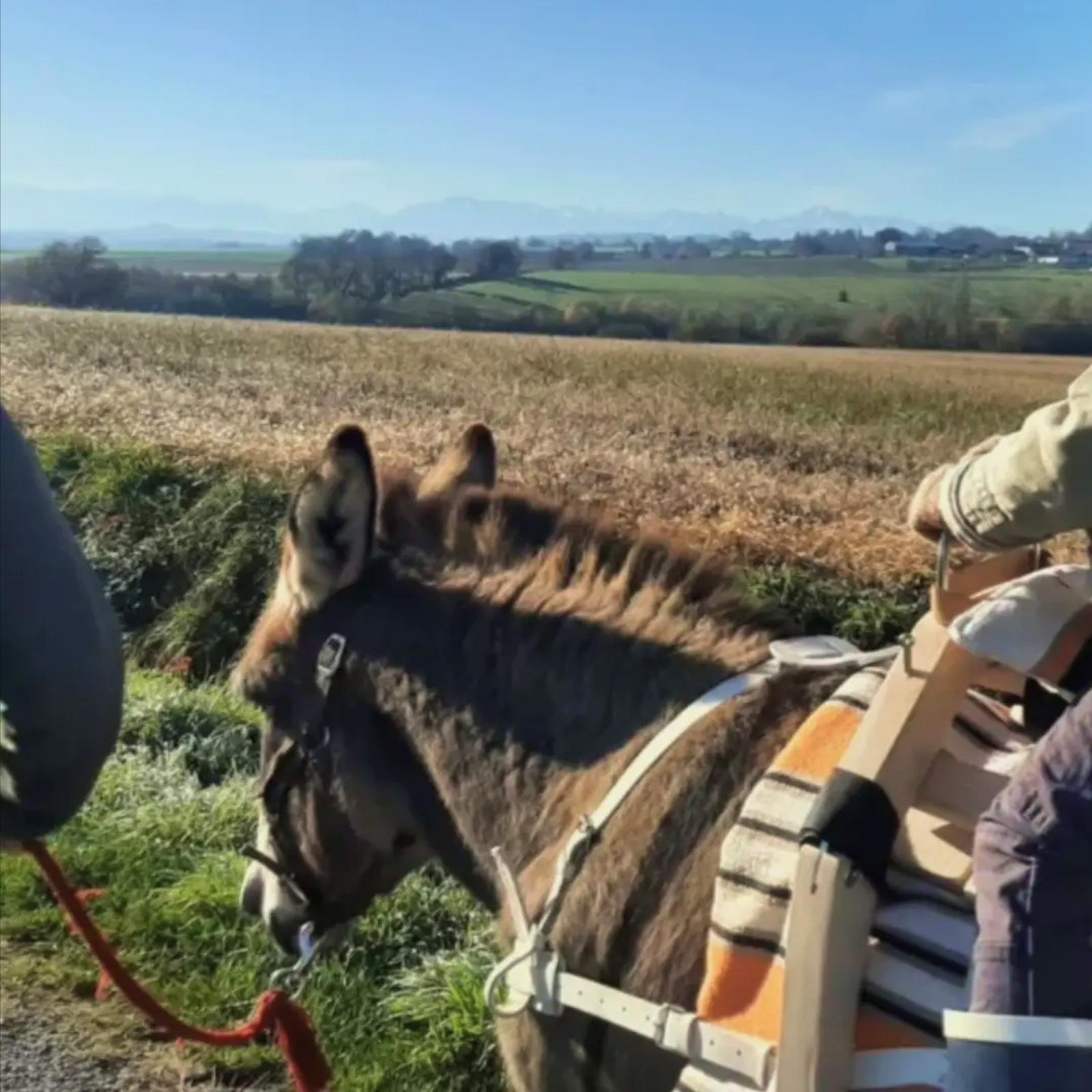
When the family contacted me, their aim was to receive specific advice on the saddle,as well as on how to saddle Salto correctly, gradually and safely, in order to provide him with a positive and respectful experience and to go for a ride with their daughter.
Remote support
All our work was carried out remotely, through regular exchanges, which meant I had to pay even closer attention to the family’s descriptions,their feelings and the observations they shared with me.
Although I never visited them in person, our communications enabled us to establish a clear, methodical support framework tailored to their needs.
Choosing the pack saddle: a crucial step
Firstly, we discussed the choice of pack saddle: a crucial element, as the wrong model can cause discomfort, pain or avoidance behaviours, whilst a well-fitted, high-quality pack saddle can accompany a donkey throughout its life without ever causing any problems.
I guided them in selecting a pack saddle suitable for Salto’s build, allowing their young daughter to sit on it, and outlined the key criteria: durable and breathable materials, sturdy stitching, an ergonomic shape,appropriate contact points, the type of straps, balanced weight distribution, and, above all, the ability to make fine adjustments.
The concept of durability was also crucial, as a good, carefully chosen pack can serve Salto for many years, without the need to invest in additional equipment or risk injury.
A gradual and respectful learning process
Once these practical aspects had been clarified, we moved on to providing practical guidance — still remotely — on the specific steps involved in getting Salto used to the pack saddle.
Saddling a donkey is never simply a matter of placing equipment on its back; it is a relational process, gradual and deeply respectful of the animal’space.
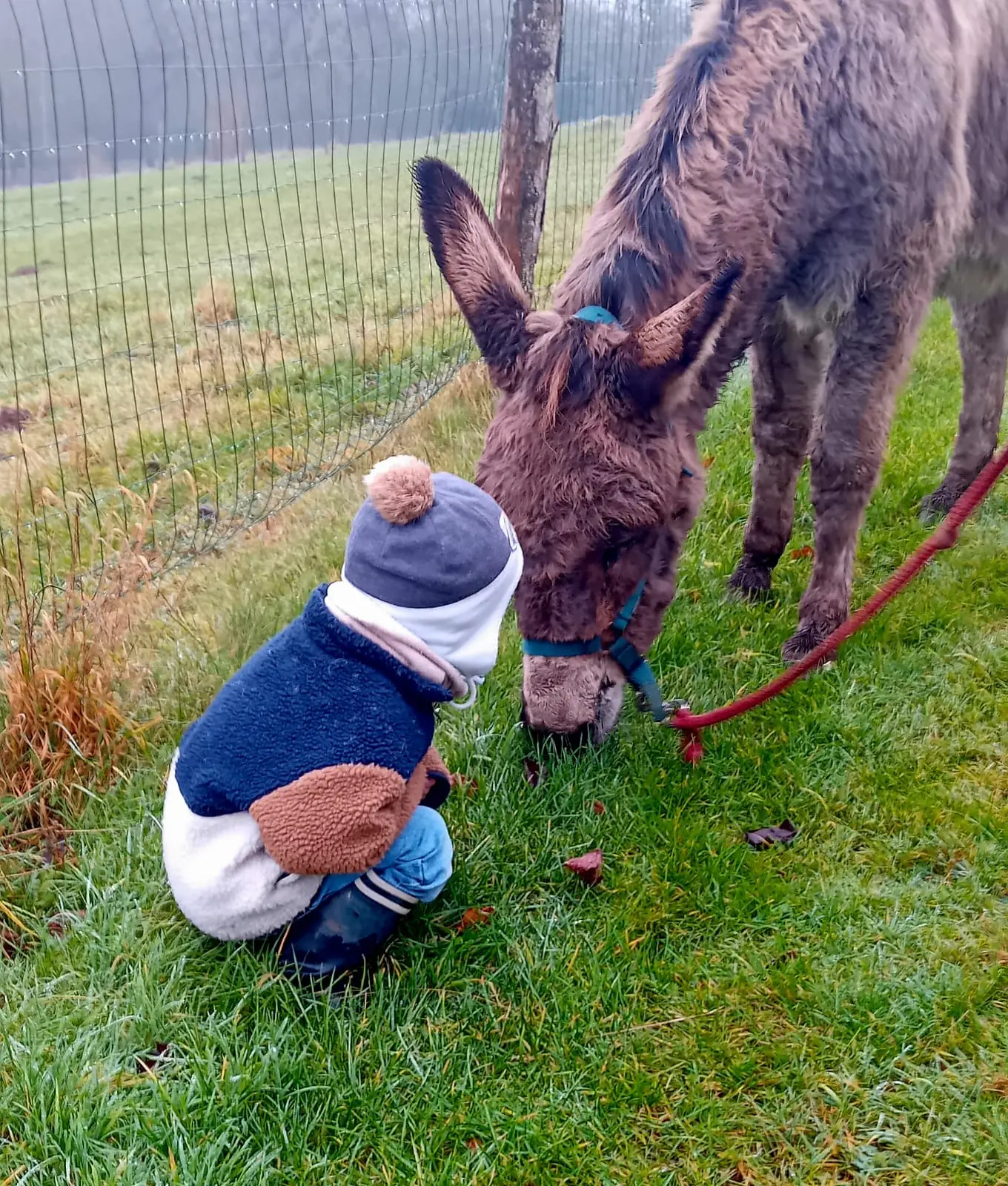
I explained to them how to introduce the pack saddle to Salto, how to let him sniff it, explore it and understand the object, before even considering the slightest physical contact.
The aim was to make the pack saddle a familiar, neutral, non-threatening object.
We then discussed how to approach Salto’s back, observe his posture and subtle cues,and maintain a calm and predictable environment, so that each session would be associated with a positive experience.
A collaborative effort
Thanks to their regular, detailed feedback and the photos this family sent me, I was able to suggest gradual adjustments: recommended movements, points to watch out for, straps to adjust, and ways to interpret the reactions of Salto and their daughter sitting on his pack saddle.
For my part, I tried to visualise every scene and every step based on their descriptions, and translate this into concrete, clear and precise advice.
A remarkable transformation
This deeply committed family has put every step into practice with remarkable dedication and a profound understanding of Salto’s well being; their patience, gentleness and consistency have enabled this beautiful donkey to develop without stress, coming to see being saddled as a safe and predictable experience.
Even today, I have great admiration for their commitment and for the way they have transformed a technical process — packing a donkey — into a moment of connection, sharing and respect.
In summary
All this work demonstrates that even from a distance, with attentive communication, it is possible to build a solid and beneficial partnership, and that when humans take the time to learn and listen, donkeys respond with sincere trust and a precious openness.